


IFT Annual Event and Expo
GRA Nutra to Bring Natural Food Colors to IFT First
The company's fermentation technology has been used to develop AuraBC, a clean-label beta-carotene suitable for yellow-to-orange tones.

By: Mike Montemarano
Associate Editor, Nutraceuticals World
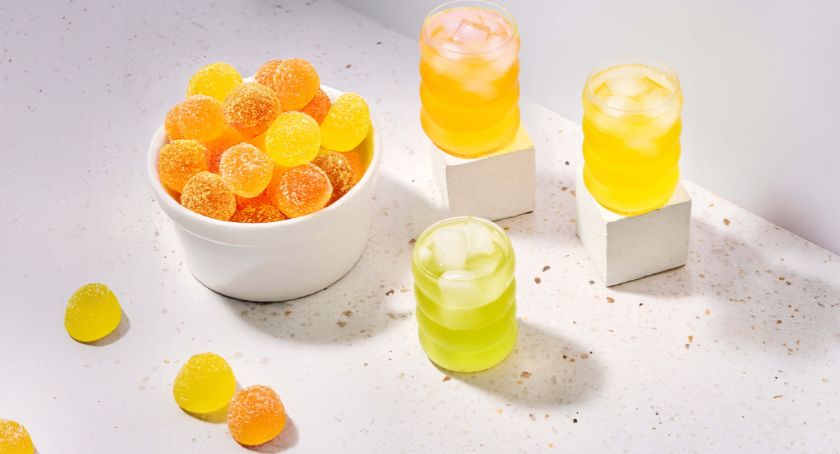
GRA Nutra AG will showcase its natural food coloring capabilities at IFT First. The company will introduce AuraBC, a clean-label beta-carotene food color derived from non-GMO fermentation. The color provides warm yellow-to-orange tones for a broad spectrum of food and beverage applications.
The company is set to operate a vertically-integrated production facility with minimal ecological footprint, with its first commercial production plant anticipated to go online in early 2027.
The AuraBC shades will be showcased in a variety of beverages and gummy concepts.
“The food color market is rapidly shifting away from FD&C petroleum-based and other synthetic dyes toward natural, clean-label ingredients,” said Lynda Doyle, CEO of GRA Nutra Corp. “This is driven by consumer distrust of artificial colors, retailer and regulatory pressure, and aggressive reformulation by major brands. Our fermentation-based colors break through the cost barrier of delivering natural alternatives that are environmentally sound.”
The U.S. Food and Drug Administration revoked its approval of Red No. 3, and is leading a broader, voluntary initiative to phase artificial colors from the food supply in the coming years. This comes alongside state-level restrictions. European standards, such as a ban against titanium dioxide and certain FD&C dyes, is reinforcing a global pivot toward reducing synthetic additives, the company reported.
“Our proprietary fermentation technology is the key to optimizing beta-carotene yields from naturally occurring strains,” said Guido Schaer, co-founder and chairman of GRA Nutra AG. “The process is vertically integrated, combining ingredient production, extraction, purification, and formulation within a single facility. This integrated model reduces transport, minimizes energy use, and improves overall efficiency and sustainability.”
AuraBC is available in spray-dried powders, beadlets, granulations, oil suspensions, and emulsions. The beadlet formulation is suitable across diverse applications and conditions, delivering excellent solubility, dispersibility, bioavailability, and organoleptic properties, the company reported. AuraBC can be standardized to concentrations of 1% to 30%.
GRA Nutra’s manufacturing relies on renewable energy, either generated on site with solar panels or through certified renewable power purchasing agreements.
“Our commitment to sustainability extends beyond energy use to the very materials we work with,” said Doyle. “Unlike petrochemical-based production, our colorant sources are renewable, fermentation-based, and algae-derived active ingredients. We prioritize short, efficient supply chains and partner only with suppliers who share our vision of achieving a zero-carbon footprint.”
Natural colors see limitations in range, stability, processing performance, and capacity, making scaling to demand a challenge. This is prompting R&D investment into fermentation- and algae-derived pigments, as well as into bolstering supply chain resilience, cost, and variability.
“GRA Nutra provides food manufacturers with a viable means of reformulating products that align with clean label, wellness, and environmental ideals, while giving brand owners a practical, sustainable alternative to synthetic colorants in flexible formats, at robust supplies, and at competitive prices,” said Schaer.
